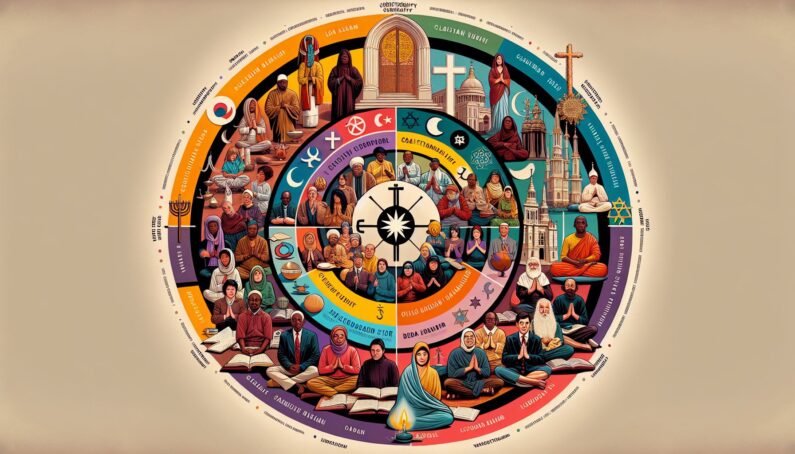
As a non-profit organization focused on education and cultural understanding, it is important to have a basic knowledge of the various religions that are practiced around the world. Religion plays a significant role in shaping societies, cultures, and individual beliefs. In this article, we will explore some of the most popular religions in the world, their beliefs, practices, and impact on society.
Christianity
Christianity is the largest religion in the world, with over 2.3 billion followers identifying as Christians. Christians believe in the teachings of Jesus Christ, whom they consider to be the Son of God. The Bible, which is divided into the Old and New Testaments, serves as the holy scripture for Christians. Christian beliefs center around love, forgiveness, and salvation through Jesus Christ.
Christian religious practices vary among denominations but often include attending church services, prayer, reading the Bible, and participating in sacraments such as baptism and communion. The church plays a central role in society, providing spiritual guidance, support, and community for its members. Christians believe in developing a personal relationship with God through prayer and seeking His will in their lives.
Islam
Islam is the second-largest religion in the world, with over 1.8 billion followers called Muslims. Muslims believe in one God, Allah, and follow the teachings of the Prophet Muhammad as revealed in the Quran. Islam emphasizes submission to the will of Allah and living a righteous life according to Islamic principles.
Muslim religious practices include the five pillars of Islam: Shahada (declaration of faith), Salat (prayer), Zakat (charity), Sawm (fasting during Ramadan), and Hajj (pilgrimage to Mecca). The mosque serves as a place of worship and community gathering for Muslims. Islam teaches the importance of maintaining a close relationship with Allah through prayer, fasting, and good deeds.
Hinduism
Hinduism is the third-largest religion in the world, with over 1.2 billion followers predominantly in India. Hindus believe in a supreme being, Brahman, who is manifested in various forms and deities. The sacred texts of Hinduism include the Vedas, Upanishads, and Bhagavad Gita, among others.
Hindu religious practices revolve around rituals, ceremonies, and festivals that honor the gods and goddesses. Pilgrimages to sacred sites such as Varanasi and the Ganges River are important for spiritual growth. Hindus strive to achieve moksha, liberation from the cycle of birth and death, through self-realization and living a virtuous life.
Buddhism
Buddhism is a major world religion with over 520 million followers, primarily in Asia. Buddhists follow the teachings of Siddhartha Gautama, known as the Buddha, who attained enlightenment and taught the path to liberation from suffering. The Tripitaka, also known as the Pali Canon, contains the sacred texts of Buddhism.
Buddhist religious practices include meditation, chanting, and offerings to the Buddha and bodhisattvas. The temple serves as a place of worship, meditation, and community gathering for Buddhists. Buddhists seek to cultivate wisdom, compassion, and mindfulness in order to achieve enlightenment and break free from the cycle of suffering.
In conclusion, understanding the beliefs and practices of the world’s most popular religions can help us foster greater cultural awareness, empathy, and mutual respect. As a non-profit organization committed to education and cultural understanding, it is essential to acknowledge and appreciate the diverse religious traditions and beliefs that contribute to the richness of our global society. By learning about and engaging with different religions, we can promote dialogue, cooperation, and unity among people of all faiths. Let us strive to cultivate understanding and harmony in our interconnected world.