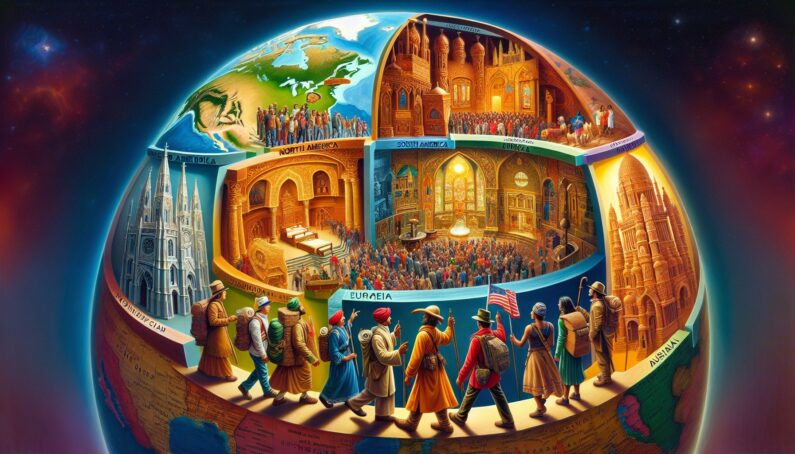
Religion has been a fundamental aspect of human culture since the beginning of time. It shapes our beliefs, influences our moral values, and provides a sense of purpose and community. Today, there are numerous religions practiced around the world, each with its own unique beliefs and traditions. In this post, we will delve into some of the most popular religions in the world and explore their key tenets.
Christianity:
One of the most widely practiced religions in the world, Christianity is centered around the belief in Jesus Christ as the son of God and the savior of humanity. Christians follow the teachings of the Bible, which is divided into the Old and New Testaments. The Old Testament contains the teachings and prophecies of the Hebrew prophets, while the New Testament details the life and teachings of Jesus Christ.
Christianity encompasses a wide range of denominations, including Catholicism, Protestantism, and Eastern Orthodoxy. Each denomination may have its own specific beliefs and practices, but all Christians share a common faith in Jesus Christ and his message of love, forgiveness, and redemption.
Religious practices in Christianity include attending church services, praying, reading scripture, and participating in sacraments such as baptism and communion. Many Christians also engage in acts of charity and service to their communities, following Jesus’ example of compassion and love for others.
Organized Religion:
Organized religion plays a significant role in shaping societies and cultures around the world. Churches, mosques, temples, and synagogues serve as places of worship, community gathering, and spiritual guidance for their members. They provide a sense of belonging and support, and offer opportunities for fellowship and growth in faith.
In addition to spiritual practices, organized religions often engage in charitable work, social advocacy, and outreach programs to support those in need and promote social justice. Religious institutions can be powerful agents of change, mobilizing their members to support causes that align with their values and beliefs.
Church in Society:
The church, or religious institution, plays a vital role in society, serving as a moral compass, a source of guidance and support, and a place of worship and community for believers. Churches often provide educational programs, social services, and outreach initiatives to address the needs of their congregants and the wider community.
Spirituality and Relationships with God:
Spirituality is a fundamental aspect of religion, encompassing the individual’s personal connection to a higher power or divine being. Through prayer, meditation, and reflection, believers seek to cultivate a deeper relationship with God and align their lives with divine will and purpose.
Relationships with God can take many forms, depending on the individual’s beliefs and practices. Some may view God as a loving and merciful father figure, while others may see God as a transcendent and mysterious force that guides and sustains the universe. Regardless of the specific beliefs, spirituality offers believers a sense of peace, solace, and purpose in a chaotic and uncertain world.
In conclusion, religion plays a crucial role in shaping our beliefs, values, and relationships with others and with the divine. By exploring the diverse world of religions and their practices, we can gain a deeper appreciation for the richness and complexity of human spirituality and the ways in which faith and community intersect in our lives.